Red Hills clay under old canopy
Jefferson County sits on the same Red Hills clay as Tallahassee, with the same consequences: water held at the surface, compaction under equipment, runoff on the slopes, and turf that struggles under dense shade.
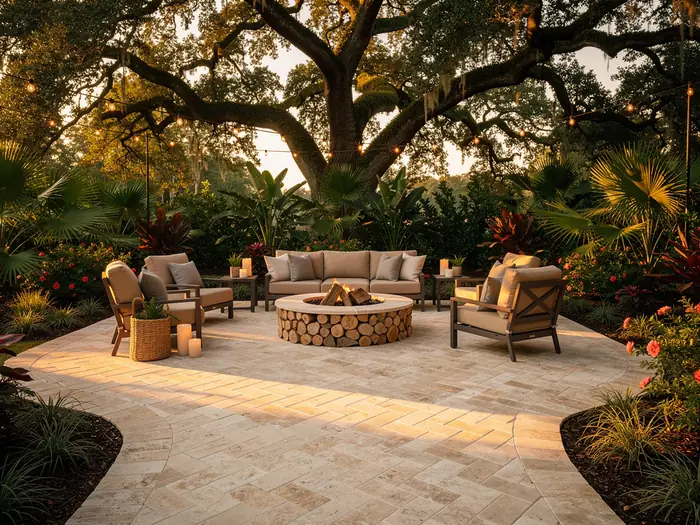
What is different here is the age of the canopy. Monticello has genuinely old live oaks and pecans, and their root systems occupy the top of the soil profile over a wide area. That rules out a lot of digging near them and makes root-zone compaction a real risk. Equipment routes matter more on these properties than on a new subdivision lot.
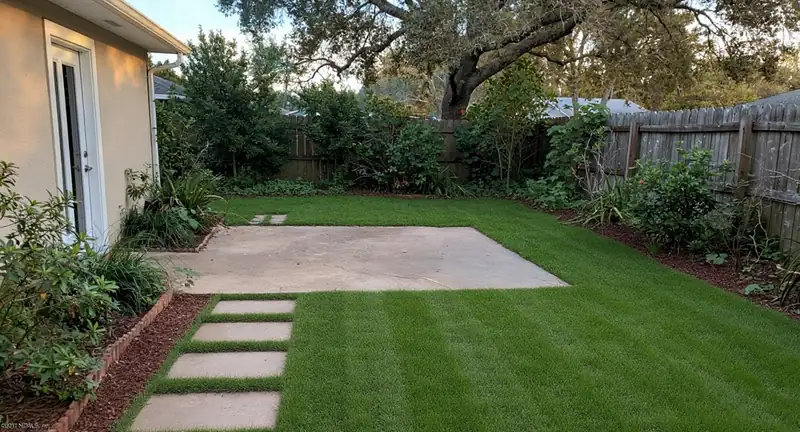
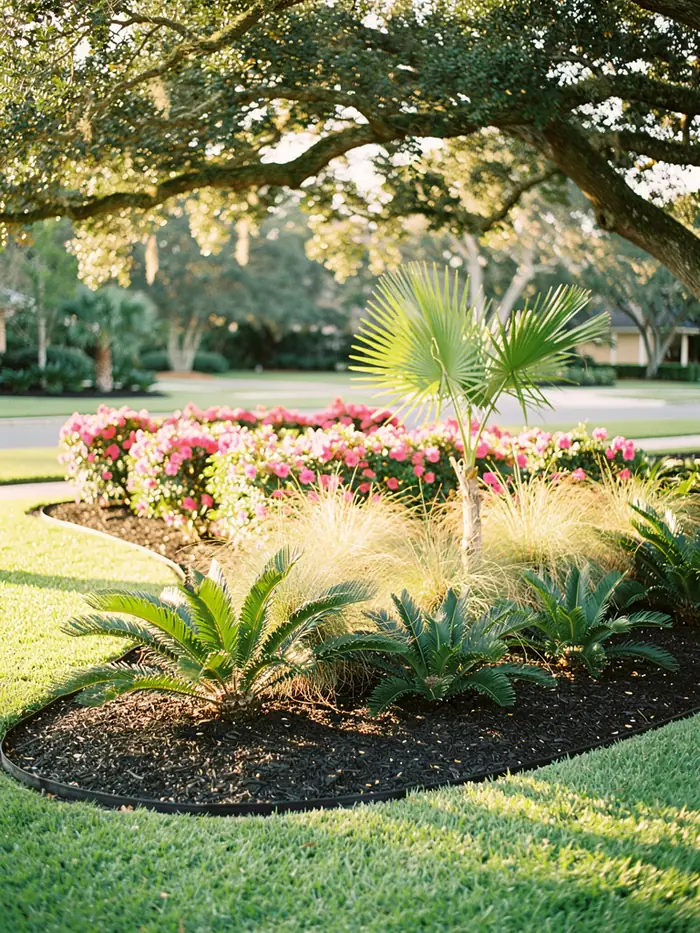
Under mature canopy the right answer is usually less lawn and more shade planting: camellia, azalea, holly fern, aucuba and liriope, with the turf kept where the light actually is.
A historic district with standards
Monticello is the Jefferson County seat, built around a courthouse on a traffic circle, with a large historic district of antebellum and Victorian homes and the Monticello Opera House on the square. It is also watermelon country, and the county is genuinely agricultural once you leave town.
Grounds on a historic property carry a different brief. Formality, symmetry and restraint read correctly here in a way that a contemporary planting scheme does not. Clay brick is the right hardscape material on these lots more often than concrete pavers, because it is the material the place is already made of and its color is fired through rather than pigmented on.
What Monticello calls about
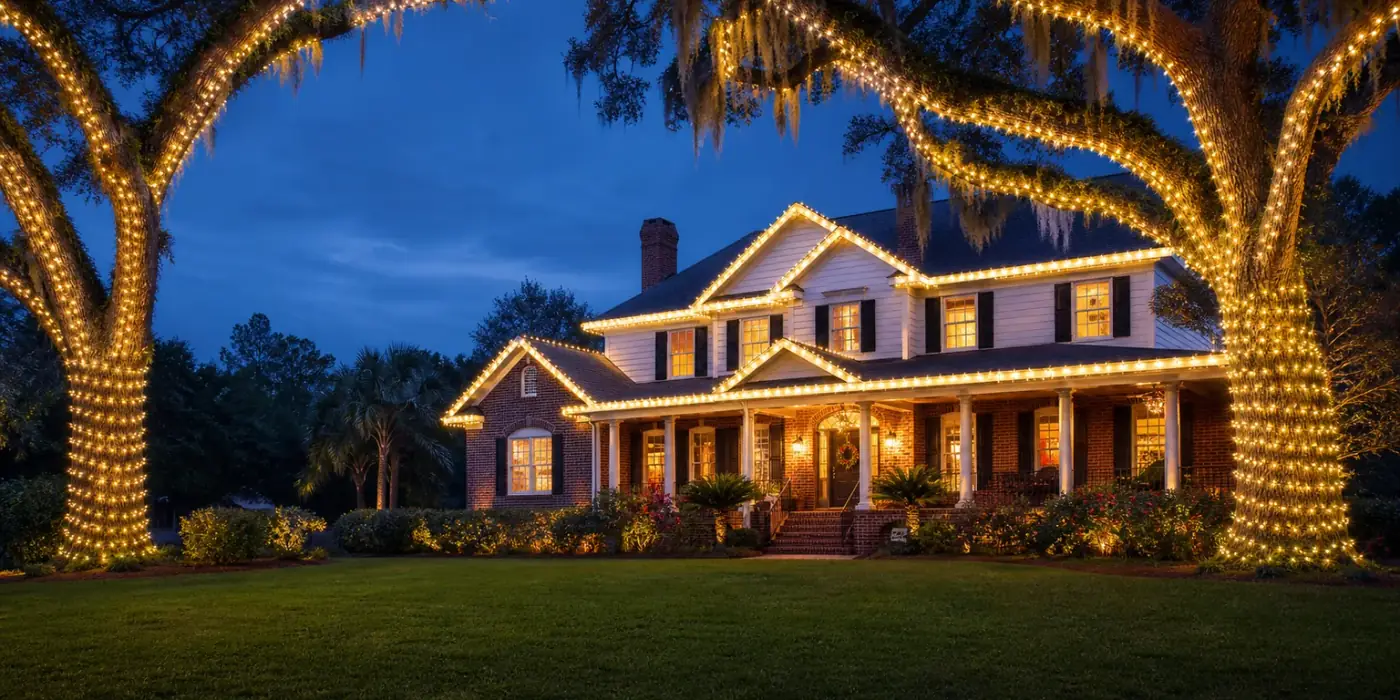
Maintenance on large old lots, shade planting under mature canopy, structural pruning and hedge renovation, clay brick walks and patios that suit historic architecture, and lighting that makes hundred year old oaks worth looking at after dark.
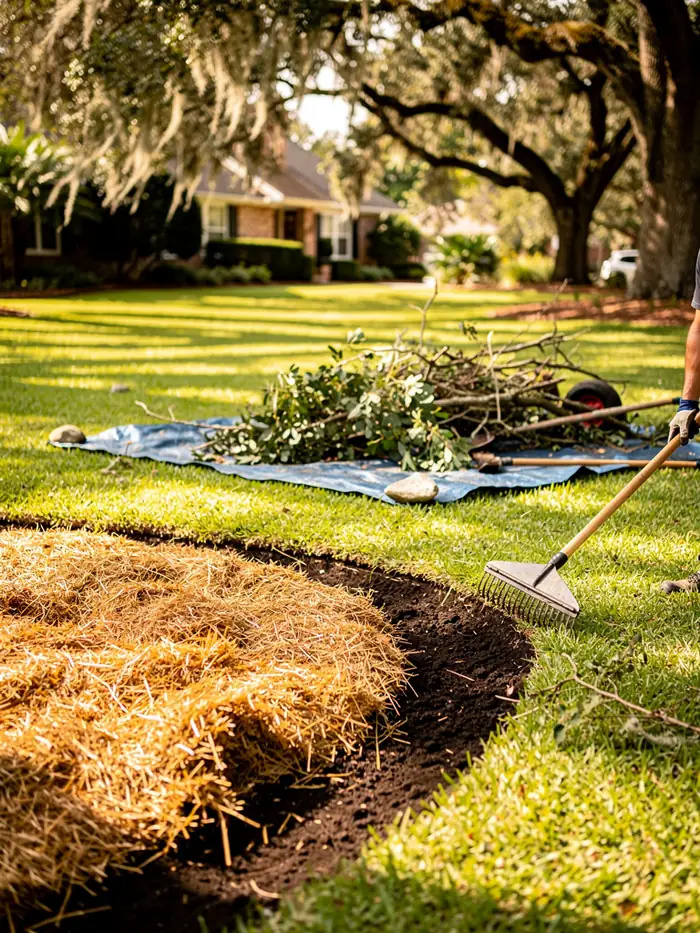
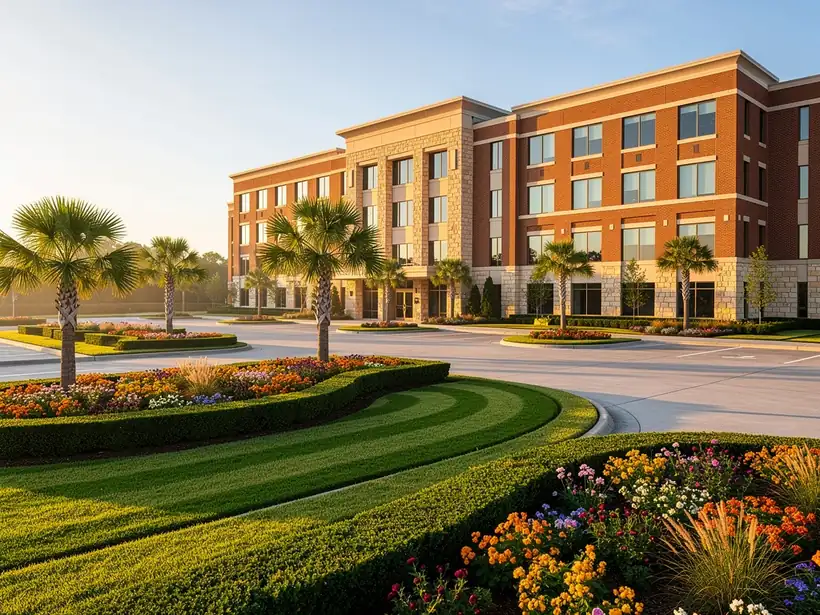
Cleanups run large here because the properties are large and the leaf and pecan litter is serious. Commercial and institutional grounds around the square work on the same documented specifications as anywhere else.